| Contenidos de Wikipedia en español bajo licencia CC BY-SA 4.0 ⇔ Mapas de OpenStreetMap bajo licencia ODbL |
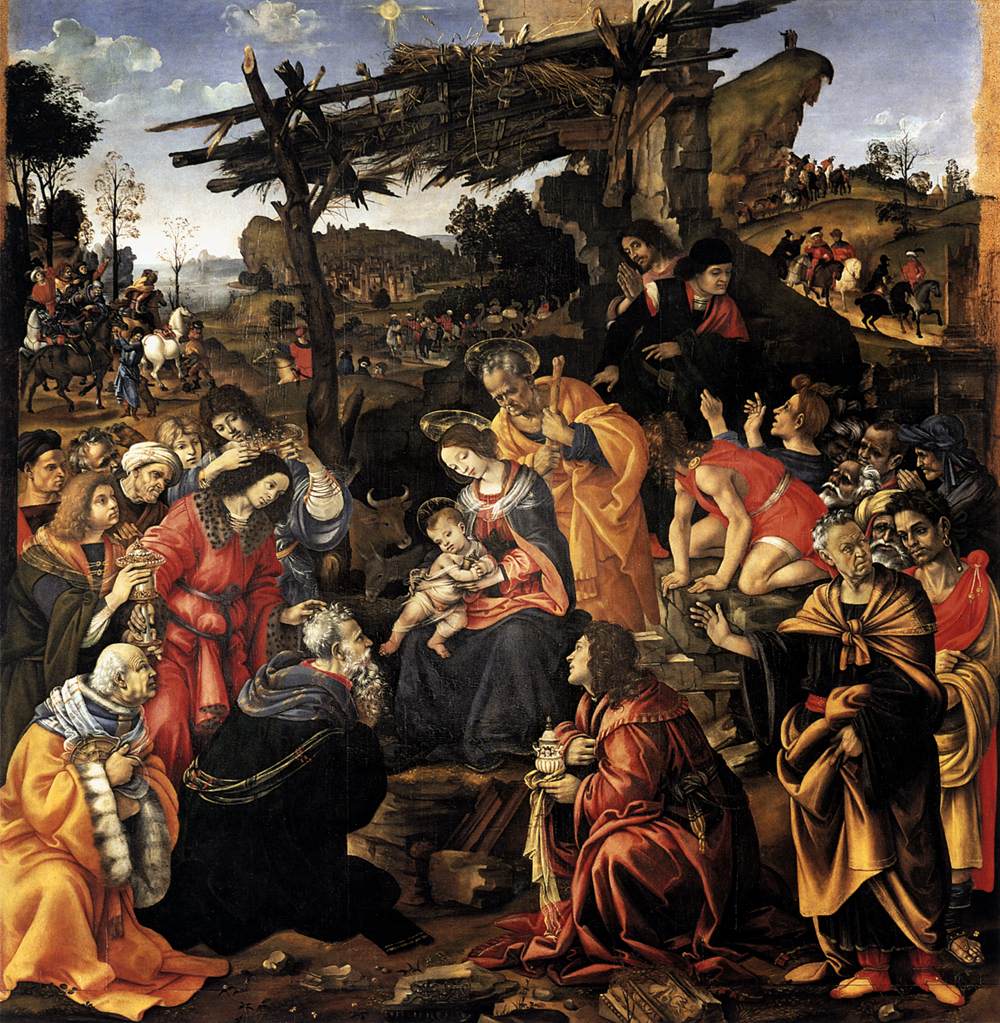
Archivo:Adorazione dei magi, filippino lippi.JPG
De Hispanopedia
Tamaño de esta previsualización: 586 × 599 píxeles. Otras resoluciones: 235 × 240 píxeles | 469 × 480 píxeles | 1000 × 1023 píxeles.
Archivo original (1000 × 1023 píxeles; tamaño de archivo: 201 kB; tipo MIME: image/jpeg)
Resumen
Filippino Lippi: Adoration of the Magi
  |
|||||||||||||||||||||||||
|---|---|---|---|---|---|---|---|---|---|---|---|---|---|---|---|---|---|---|---|---|---|---|---|---|---|
| Artista |
|
 | |||||||||||||||||||||||
| Título | |||||||||||||||||||||||||
| Object type | pintura | ||||||||||||||||||||||||
| Género | arte religioso | ||||||||||||||||||||||||
| Descripción | |||||||||||||||||||||||||
| Personas retratadas | |||||||||||||||||||||||||
| Fecha | 1496 | ||||||||||||||||||||||||
| Técnica | Óleo sobre tabla | ||||||||||||||||||||||||
| Dimensiones | altura: 258 cm; ancho: 243 cm | ||||||||||||||||||||||||
| Colección |
|
||||||||||||||||||||||||
| Ubicación actual | |||||||||||||||||||||||||
| Número de inventario |
00285664 (Galería Uffizi) |
||||||||||||||||||||||||
| Referencias |
|
||||||||||||||||||||||||
| Fuente/fotógrafo |
Web Gallery of Art:  Imagen Imagen  Info about artwork Info about artwork |
||||||||||||||||||||||||
| Otras versiones |
|
||||||||||||||||||||||||


.jpg)

Licencia
|
Esta es una reproducción fotográfica fiel de una obra de arte bidimensional de dominio público. La obra de arte misma se halla en el dominio público por el motivo siguiente:
La postura oficial de la Fundación Wikimedia considera que «las reproducciones fieles de obras de arte bidimensionales de dominio público forman parte del dominio público».
Esta reproducción fotográfica, por ende, también se considera de dominio público dentro de los Estados Unidos. Es posible que otras jurisdicciones restrinjan la reutilización de este contenido; consúltese Reutilización de fotografías PD-Art (en inglés) para más detalles. | ||||

Historial del archivo
Haz clic sobre una fecha y hora para ver el archivo tal como apareció en ese momento.
| Fecha y hora | Miniatura | Dimensiones | Usuario | Comentario | |
|---|---|---|---|---|---|
| actual | 10:15 23 oct 2009 | Sin miniatura | 1000 × 1023 (201 kB) | wikimediacommons>Shakko | quality |
Usos del archivo
La siguiente página usa este archivo:


