| Contenidos de Wikipedia en español bajo licencia CC BY-SA 4.0 ⇔ Mapas de OpenStreetMap bajo licencia ODbL |
Archivo:Capturing Damiate.jpg
De Hispanopedia
Tamaño de esta previsualización: 800 × 337 píxeles. Otras resoluciones: 320 × 135 píxeles | 640 × 270 píxeles | 1458 × 614 píxeles.
Archivo original (1458 × 614 píxeles; tamaño de archivo: 155 kB; tipo MIME: image/jpeg)
Resumen
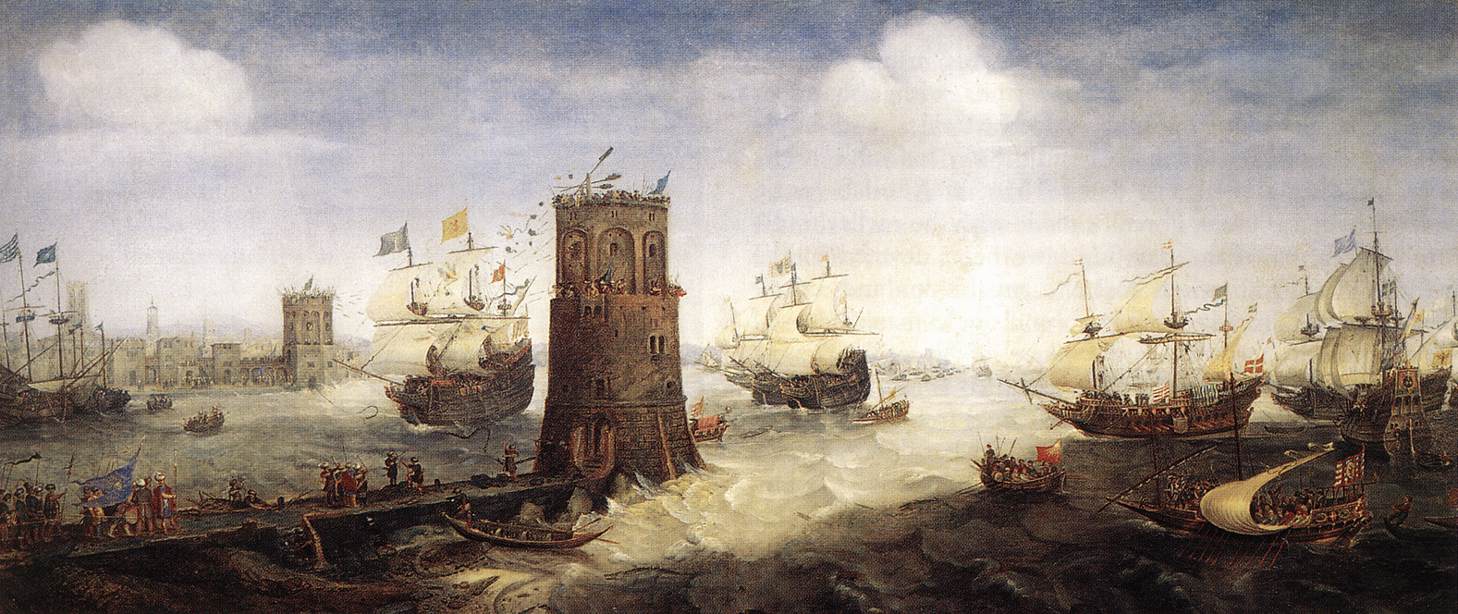
Cornelis Claesz. van Wieringen: The capture of Damietta
  |
|||||||||||||||||||||||||||||
|---|---|---|---|---|---|---|---|---|---|---|---|---|---|---|---|---|---|---|---|---|---|---|---|---|---|---|---|---|---|
| Artista |
|
 | |||||||||||||||||||||||||||
| Título |
inglés: A Haarlem ship cuts the chain of the port of Damietta on November 15, 1219 The capture of Damietta |
||||||||||||||||||||||||||||
| Object type | pintura | ||||||||||||||||||||||||||||
| Género | pintura de historia | ||||||||||||||||||||||||||||
| Descripción |
Nederlands: De verovering van Damiate. Dit schilderij werd gemaakt voor boven de schoorsteenmantel van de krijgsraadkamer in het gebouw van de Haarlemse Cluveniers (schutters).
English: The Conquest of Damiate. This painting was made for above the mantelpiece of the court-martial room in the building of the Haarlem Cluveniers (gunmen). |
||||||||||||||||||||||||||||
| Fecha | hacia antes de 1628 | ||||||||||||||||||||||||||||
| Técnica | óleo sobre tela | ||||||||||||||||||||||||||||
| Dimensiones | altura: 101 cm ; ancho: 230 cm | ||||||||||||||||||||||||||||
| Colección |
|
||||||||||||||||||||||||||||
| Número de inventario |
os I-355 (Museo Frans Hals) |
||||||||||||||||||||||||||||
| Exhibition history | |||||||||||||||||||||||||||||
| Referencias | |||||||||||||||||||||||||||||
| Fuente/fotógrafo |
Web Gallery of Art:  Imagen Imagen  Info about artwork Info about artwork |
||||||||||||||||||||||||||||
| Otras versiones |
|
||||||||||||||||||||||||||||


.JPG)


Licencia
|
Esta es una reproducción fotográfica fiel de una obra de arte bidimensional de dominio público. La obra de arte misma se halla en el dominio público por el motivo siguiente:
La postura oficial de la Fundación Wikimedia considera que «las reproducciones fieles de obras de arte bidimensionales de dominio público forman parte del dominio público».
Esta reproducción fotográfica, por ende, también se considera de dominio público dentro de los Estados Unidos. Es posible que otras jurisdicciones restrinjan la reutilización de este contenido; consúltese Reutilización de fotografías PD-Art (en inglés) para más detalles. | ||||

Historial del archivo
Haz clic sobre una fecha y hora para ver el archivo tal como apareció en ese momento.
| Fecha y hora | Miniatura | Dimensiones | Usuario | Comentario | |
|---|---|---|---|---|---|
| actual | 17:23 11 jul 2008 | | 1458 × 614 (155 kB) | wikimediacommons>Mcke | version with higher resolution |
Usos del archivo
La siguiente página usa este archivo:


