| Contenidos de Wikipedia en español bajo licencia CC BY-SA 4.0 ⇔ Mapas de OpenStreetMap bajo licencia ODbL |
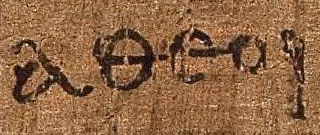
Archivo:Ephesians 2,12 - Greek atheos.jpg
De Hispanopedia
Ephesians_2,12_-_Greek_atheos.jpg (320 × 135 píxeles; tamaño de archivo: 45 kB; tipo MIME: image/jpeg)
| Descripción |
The Greek word "atheoi" αθεοι ("[those who are] without god") as it appears in the Epistle to the Ephesians 2:12, on the early 3rd-century Papyrus 46. This word - in any of its forms - appears nowhere else in the New Testament or the Koine Greek version of the Old Testament.
|
| Fecha | End of IInd century - first half of IIIrd century A.D. (?) |
| Fuente | Advanced Papyrological Information System, UM, [1] |
| Autor |
Desconocido Image uploaded to en.wikipedia by en:User:Brian0918 on 15:48, 29 March 2007. |

|
Este material está en dominio público en los demás países donde el derecho de autor se extiende por 100 años (o menos) tras la muerte del autor.  También debes incluir una etiqueta de dominio público de los Estados Unidos para indicar por qué esta obra está en el dominio público en los Estados Unidos. También debes incluir una etiqueta de dominio público de los Estados Unidos para indicar por qué esta obra está en el dominio público en los Estados Unidos.
|
| Esta obra ha sido identificada como libre de las restricciones conocidas en virtud del derecho de autor, incluyendo todos los derechos conexos. | |
Historial del archivo
Haz clic sobre una fecha y hora para ver el archivo tal como apareció en ese momento.
| Fecha y hora | Miniatura | Dimensiones | Usuario | Comentario | |
|---|---|---|---|---|---|
| actual | 12:55 9 mar 2008 | Sin miniatura | 320 × 135 (45 kB) | wikimediacommons>Dread83 | '''From en.wikipedia''' The Greek word "atheoi" ("[those who are] without god") as it appears in the Epistle to the Ephesians 2:12, on the early 3rd-century Papyrus 46. This word - in any of its forms - appears nowhere else in the New |
Usos del archivo
La siguiente página usa este archivo: